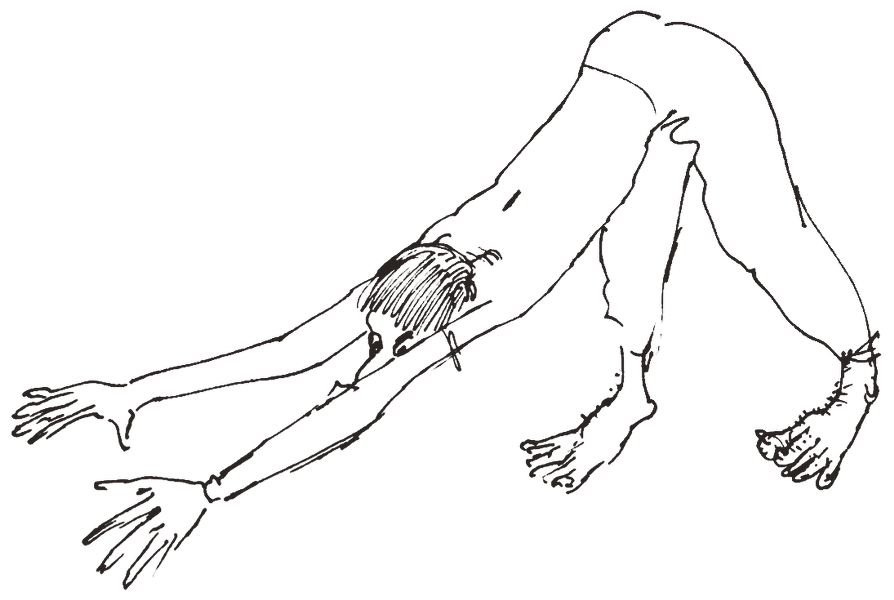
I have never done Ashtanga. Can I come?Ich habe noch nie Ashtanga gemacht. Kann ich kommen?

Yes. You don’t need to know the sequence before you come. You learn it here, slowly and one part at a time.

In many ways, beginning without knowing anything is quite wonderful.

There is nothing to unlearn and nothing you are supposed to prove.

Ja. Du musst die Abfolge nicht kennen, bevor du kommst. Du lernst sie hier, langsam und Stück für Stück.

In vieler Hinsicht ist es ziemlich wunderbar, ohne jedes Vorwissen anzufangen.

Es gibt nichts zu verlernen und nichts zu beweisen.

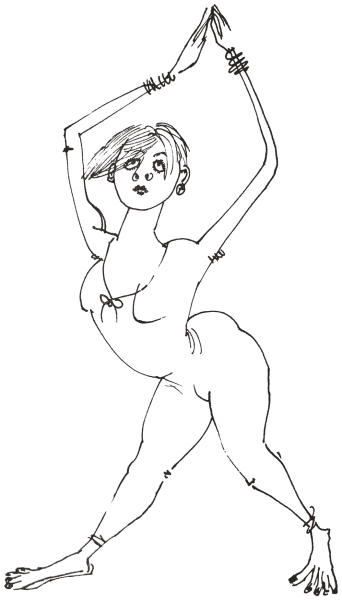
Ink drawing of a woman stretching her arms overhead, a little unsure

Do I need to be flexible?Muss ich beweglich sein?

No. Flexibility is not a requirement for yoga.
Neither is strength.

You come with the body you have.

Nein. Beweglichkeit ist keine Voraussetzung für Yoga.
Kraft auch nicht.

Du kommst mit dem Körper, den du hast.

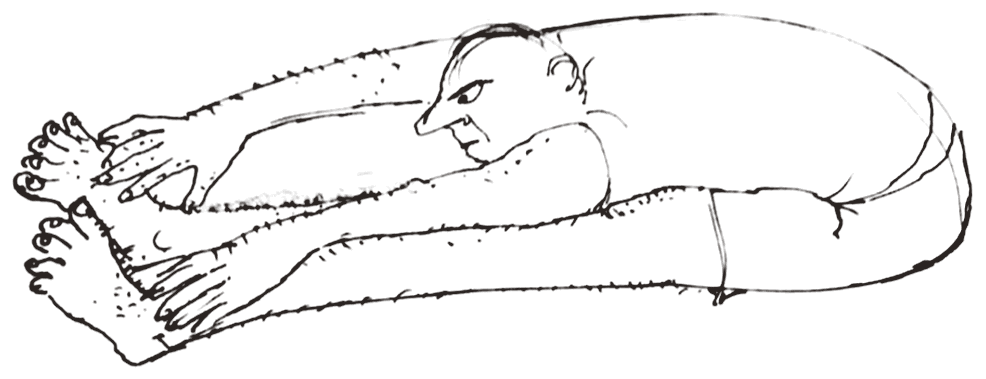
Ink drawing of a man straining in a seated forward bend

Am I too old to start?Bin ich zu alt, um anzufangen?

No. The practice does not belong to young, flexible bodies.

How you practise at twenty-five may be very different from how you practise at fifty, seventy or eighty.

That is not a lesser practice.
It is your practice.

Nein. Die Praxis gehört nicht den jungen, beweglichen Körpern.

Wie du mit fünfundzwanzig übst, kann ganz anders sein als mit fünfzig, siebzig oder achtzig.

Das ist keine geringere Praxis.
Es ist deine Praxis.

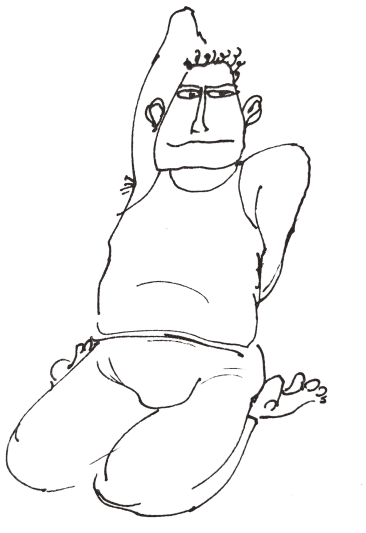
Ink drawing of a stern man kneeling, arms behind his back

But everyone else will know what they are doing.Aber alle anderen wissen, was sie tun.

Some will. Some absolutely won’t.

And most people are far too occupied with their own breath, body and practice to worry about yours.

Manche schon. Manche ganz sicher nicht.

Und die meisten sind viel zu sehr mit ihrem eigenen Atem, Körper und ihrer Praxis beschäftigt, um sich um deine zu kümmern.

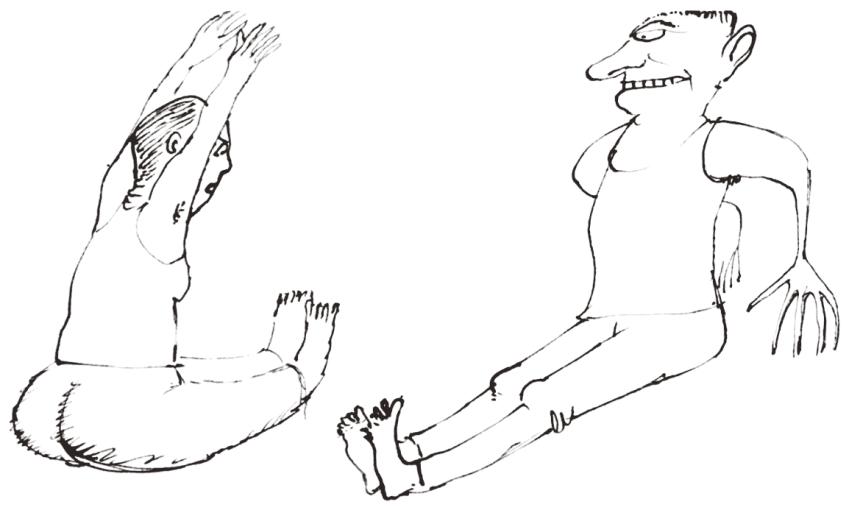
Ink drawing of two people on the floor, one reaching up, one looking sceptical

What does “traditional” mean here?Was heißt hier „traditionell“?

It does not mean that everything old is automatically right.

It means that I teach Ashtanga as a practice learned gradually, through repetition and relationship between student and teacher.

There is a sequence. There is a method. There is continuity.

Tradition gives us something to work with.
It does not relieve us of the responsibility to think.

Es heißt nicht, dass alles Alte automatisch richtig ist.

Es heißt, dass ich Ashtanga als eine Praxis unterrichte, die nach und nach gelernt wird – durch Wiederholung und die Beziehung zwischen Schüler:in und Lehrerin.

Es gibt eine Abfolge. Es gibt eine Methode. Es gibt Kontinuität.

Tradition gibt uns etwas, womit wir arbeiten können.
Sie nimmt uns nicht die Verantwortung ab, selbst zu denken.

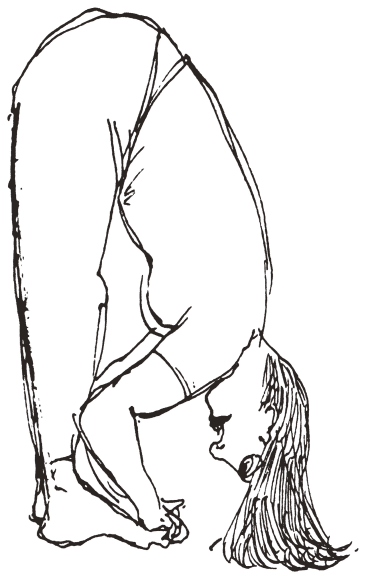
Ink drawing of a woman folded forward, head to her shins

Do I have to practise six days a week?Muss ich sechs Tage pro Woche üben?

No.
You have a life.

Work. Children. Relationships. Bodies that sometimes sleep badly. Days when things simply don’t go according to plan.

Consistency matters.
Perfection does not.

We find a rhythm that is realistic enough that you can actually keep returning to it.

Nein.
Du hast ein Leben.

Arbeit. Kinder. Beziehungen. Körper, die manchmal schlecht schlafen. Tage, an denen einfach nichts nach Plan läuft.

Beständigkeit zählt.
Perfektion nicht.

Wir finden einen Rhythmus, der realistisch genug ist, dass du tatsächlich immer wieder zurückkommen kannst.

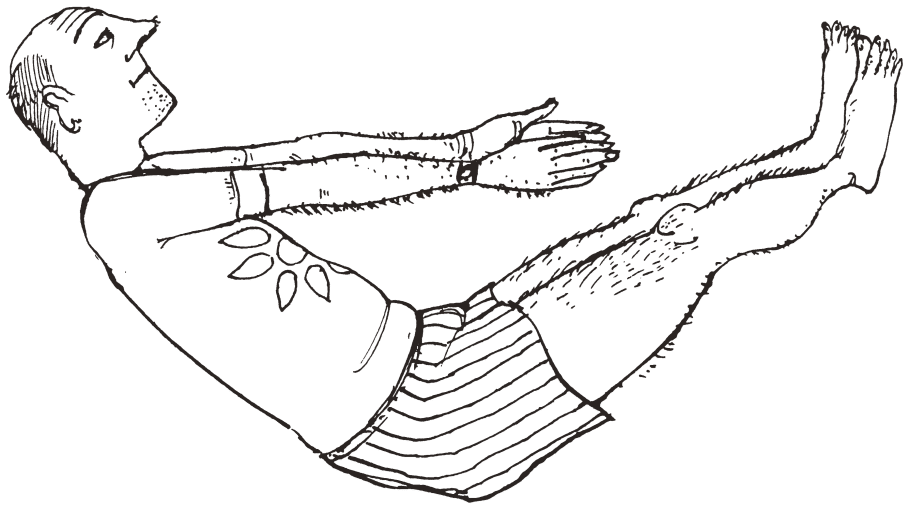
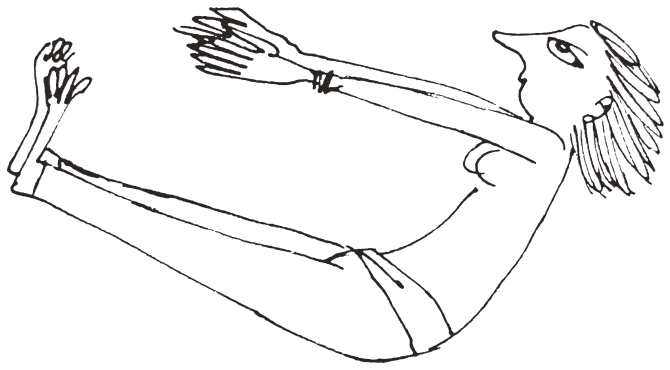
Ink drawing of a man balancing in boat pose, arms reaching forward

What if I have an injury?Was ist, wenn ich verletzt bin?

Tell me.

An injury does not necessarily mean that you cannot practise. It may mean that the practice needs to change. Sometimes considerably.

And sometimes rest really is the practice.

Sag es mir.

Eine Verletzung heißt nicht unbedingt, dass du nicht üben kannst. Vielleicht heißt sie, dass sich die Praxis verändern muss. Manchmal ziemlich stark.

Und manchmal ist Ruhe wirklich die Praxis.

Will you adjust me physically?Wirst du mich körperlich korrigieren?

Sometimes.

But an adjustment is not something a teacher is entitled to do to your body. There should be a reason for it.

And you can always say no.

Manchmal.

Aber eine Korrektur ist nichts, worauf eine Lehrerin bei deinem Körper ein Recht hat. Es sollte einen Grund dafür geben.

Und du kannst immer Nein sagen.

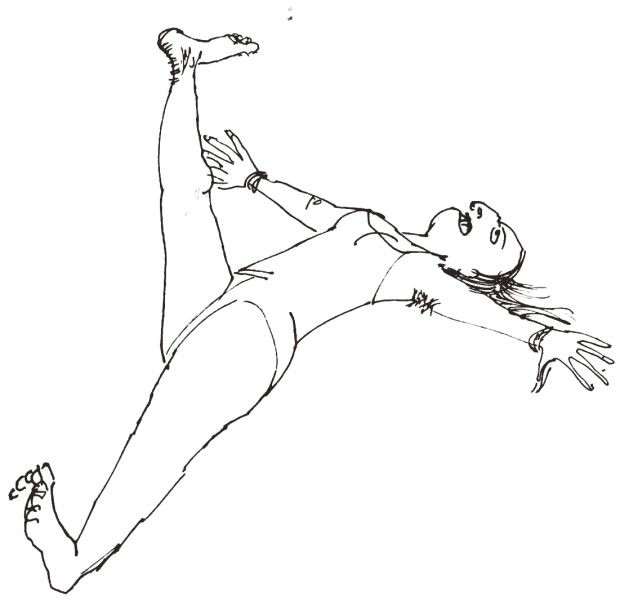
Ink drawing of a woman lying on her back, one leg stretched up

How do I know when I am ready for the next posture?Woher weiß ich, wann ich bereit für die nächste Haltung bin?

You don’t have to know.
That is part of what I am there for.

Sometimes the answer will be yes.
Sometimes not yet.
Neither is a judgement of you.

Das musst du nicht wissen.
Auch dafür bin ich da.

Manchmal ist die Antwort ja.
Manchmal noch nicht.
Keins von beidem ist ein Urteil über dich.

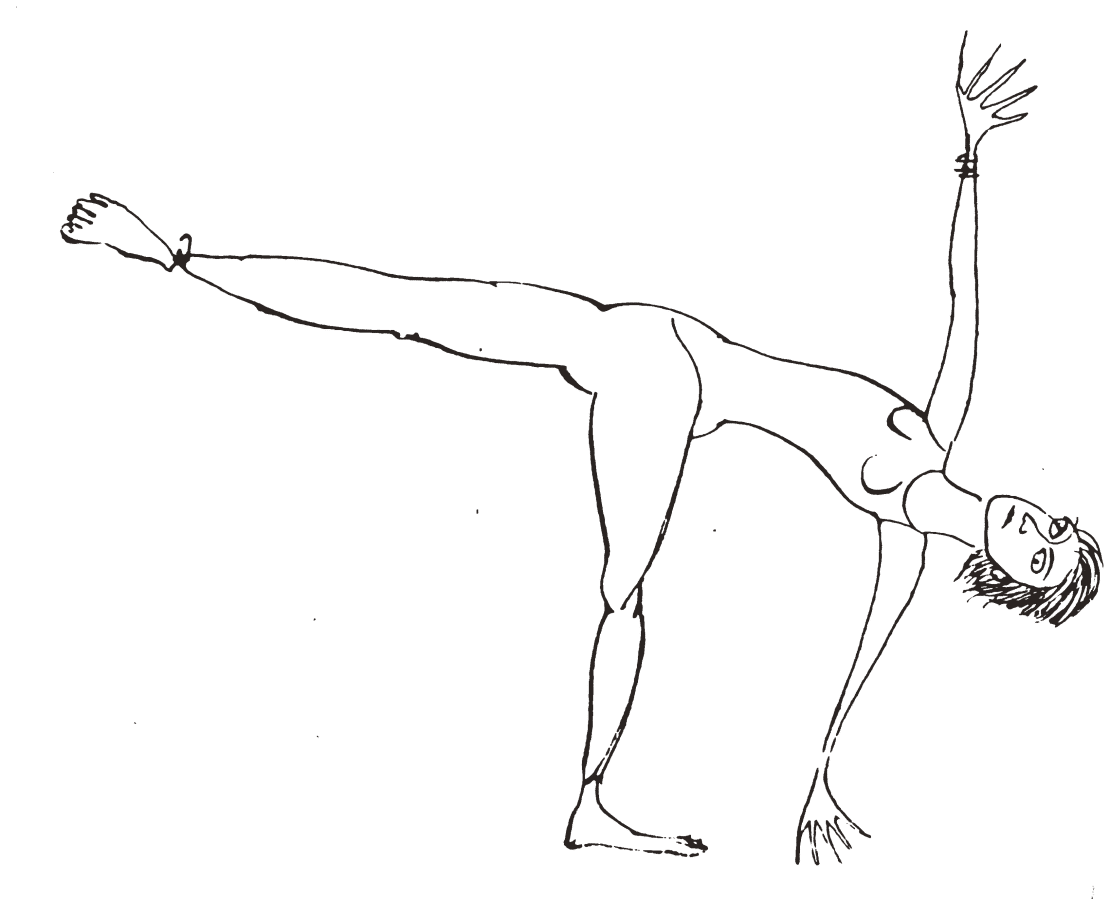
Ink drawing of a woman balancing in half moon pose

How long does it take to become advanced?Wie lange dauert es, bis man fortgeschritten ist?

That depends entirely on what you mean by advanced.

If you mean difficult postures, some bodies learn them quickly and others never will.

If you mean becoming more attentive, patient, honest and a little less driven by every reaction that appears – that may take a lifetime.

Das hängt ganz davon ab, was du mit fortgeschritten meinst.

Wenn du schwierige Haltungen meinst: Manche Körper lernen sie schnell, andere nie.

Wenn du meinst, aufmerksamer, geduldiger, ehrlicher und ein bisschen weniger von jeder auftauchenden Reaktion getrieben zu werden – das kann ein Leben lang dauern.

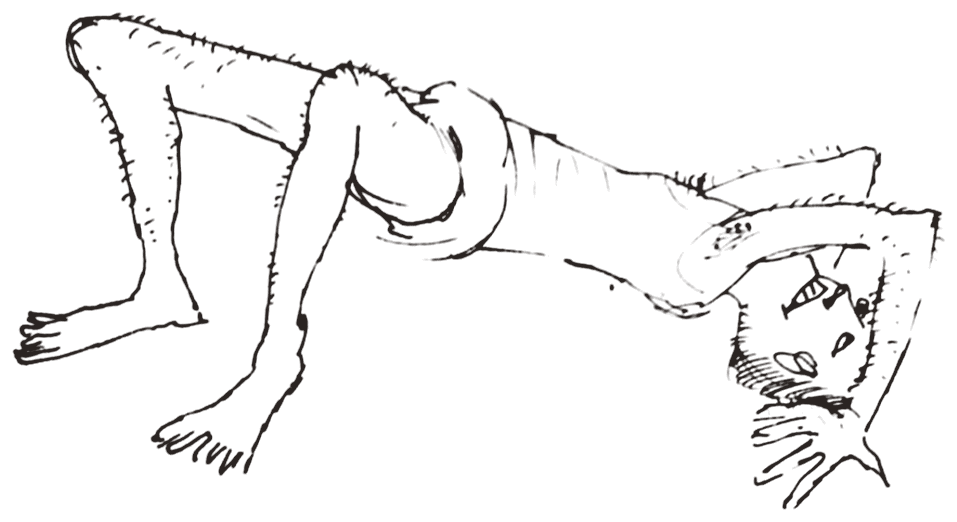
Ink drawing of a man arching into a backbend

Can I come once just to try it?Kann ich einmal einfach zum Ausprobieren kommen?

One practice will probably not tell you very much. Mysore Style is something you learn over time.

The first morning may feel unfamiliar. You are learning the room, the rhythm, the practice – and I am getting to know you.

If you are curious, write to me first. Tell me a little about yourself, whether you have practised yoga before, and what brings you here.

And if you are not sure whether this is for you, you are very welcome to come and watch. Sit quietly in the room. Stay for ten minutes or for the whole practice. Watch how people arrive, how they practise, how I teach, and how different one person’s practice can look from another’s.

There is nothing you need to decide that morning.

Sometimes watching tells you much more than trying something once.

Eine einzelne Einheit verrät dir wahrscheinlich nicht sehr viel. Mysore Style lernt man mit der Zeit.

Der erste Morgen fühlt sich vielleicht ungewohnt an. Du lernst den Raum kennen, den Rhythmus, die Praxis – und ich lerne dich kennen.

Wenn du neugierig bist, schreib mir zuerst. Erzähl mir ein wenig über dich, ob du schon Yoga geübt hast und was dich herführt.

Und wenn du nicht sicher bist, ob das etwas für dich ist, bist du herzlich eingeladen, einfach zuzuschauen. Setz dich still in den Raum. Bleib zehn Minuten oder die ganze Praxis lang. Schau, wie die Leute ankommen, wie sie üben, wie ich unterrichte – und wie verschieden die Praxis einer Person von der einer anderen aussehen kann.

An diesem Morgen musst du nichts entscheiden.

Manchmal erzählt dir Zuschauen viel mehr, als etwas einmal auszuprobieren.
Ink drawing of a woman balancing in boat pose

What should I bring?Was soll ich mitbringen?

Comfortable clothes.
A mat if you have one.
And yourself.

That is enough.

Bequeme Kleidung.
Eine Matte, falls du eine hast.
Und dich selbst.

Das genügt.

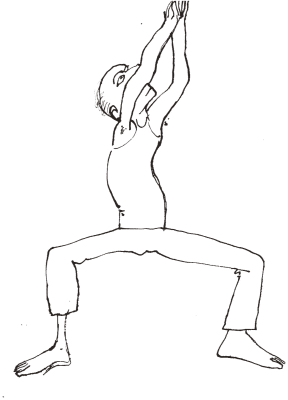
Ink drawing of a man in a wide standing posture, arms raised
What if I still have questions?Und wenn ich noch Fragen habe?

Then ask.
You are not supposed to understand everything before you begin.

Dann frag.
Du musst nicht alles verstehen, bevor du beginnst.